
Can an Intraocular Lens Be Removed? IOL Exchange Explained

Every so often a patient arrives who’s had cataract surgery somewhere else, has a perfectly well-placed lens in their eye, and hates it. Halos at night, a smeary quality to everything, reading that never got sharp. They’ve usually been told to give it time, and they have. What they haven’t been told is that the lens can come out.
It can. In the right circumstances, removing an intraocular lens and replacing it is a routine operation, and I’d like to explain when it’s done, what makes it straightforward, and the one thing that makes it harder.
When a lens is removed
Two situations account for most of the lens exchanges I do.
Lens opacification. Occasionally an implanted lens itself turns cloudy over the years. It isn’t the common “secondary cataract” of the capsule behind the lens, which a YAG laser clears in minutes; it’s the lens material changing. A cloudy lens can’t be polished, so it’s exchanged.
Dissatisfaction with a multifocal or extended-depth-of-focus lens. This is by far the more common reason, and it’s usually a story about the wrong lens in the wrong eye. Light-splitting lenses do wonderful things for the right candidate. In an eye that was never a good candidate, they can be a daily misery.
The patients I see most often are people with keratoconus who have had a multifocal lens implanted. A multifocal divides light between distance and near and asks the cornea to deliver each share cleanly. A keratoconic cornea can’t; it already scatters light, and stacking a light-splitting lens on top compounds the blur and the glare. Multifocal lenses aren’t typically a good choice in eyes with significant corneal disease, and when they’ve been used anyway, the answer is to take the lens out and put in one the eye can work with.
That pattern isn’t unique to my clinic. The long-running ASCRS/ESCRS survey of surgeons who remove lenses finds that glare and optical aberrations are the leading reason multifocal lenses are explanted, with dislocation and incorrect lens power the other main reasons across lens types generally.
The one question that matters: is the capsule intact?
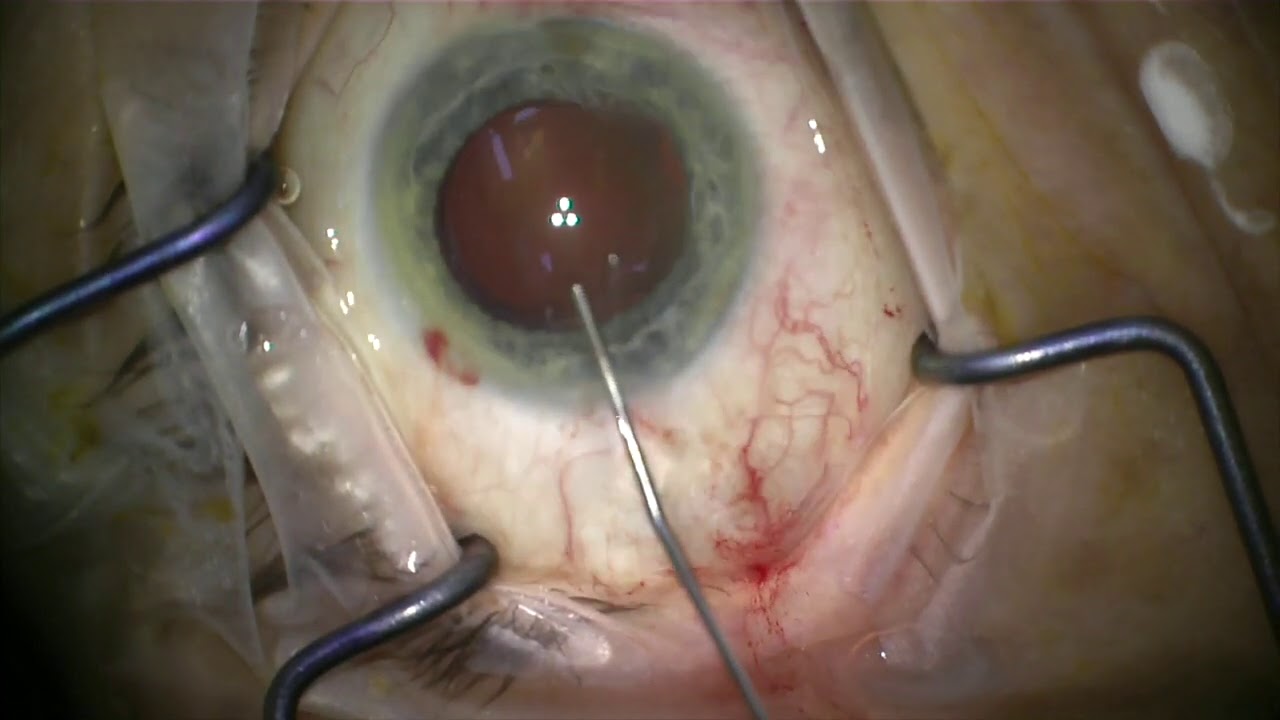
When your cataract was removed, the lens implant was placed inside the thin, clear bag that used to hold your natural lens. The back wall of that bag is the posterior capsule. It’s what holds the lens in position, and it’s what makes an exchange routine, because I can work in front of it, cut the old lens into pieces with purpose-made micro-instruments, remove them through a small incision, and place the new lens into the same support.
If that capsule has been opened with a YAG laser capsulotomy, the situation changes. The support is gone, the pieces have nowhere safe to sit, and the operation becomes a more involved one. It can still be done, but it isn’t the quick, routine procedure it would otherwise be.
So if you’re unhappy with your lens and someone offers you a YAG laser to “tidy things up”, pause. Have the lens question answered first. It’s the single most useful thing in this post.
What the operation involves
With the capsule intact, lens exchange is fairly routine and fairly quick. The old lens is cut inside the eye with instruments designed for exactly that job and removed through the same small incision used for the original surgery. The new lens goes into the bag where the old one sat. There are no stitches.
You’re asleep for it, under heavy sedation from a specialist anaesthetist, and the eye is numbed with anaesthetic drops alone: no needle, no general anaesthetic. It’s a day procedure, and you go home with someone to drive you. I’ve written before about being asleep for cataract surgery; the arrangement here is the same.
What goes back in
The point of exchanging a lens is to end up with one that suits the eye, so the choice matters more than the removal. For a patient with an irregular cornea, that usually means a good monofocal lens, sometimes with astigmatism correction, rather than another light-splitting design; the clarity people gain from a single clean focus often surprises them after months of multifocal blur. Where the cornea is healthy and the problem was a power miss rather than the design itself, the options are wider. Either way, the decision is made from your corneal maps before surgery, which is the step that should have happened the first time.
If you’re weighing up lenses before a first operation rather than after one, the guide to choosing an intraocular lens is where to start, and it’s worth reading the section on who shouldn’t choose a trifocal before anyone puts one in an eye with corneal disease.
Before deciding
Removal isn’t the first move for everyone. Some patients adapt to a multifocal over several months as the brain learns to filter the extra images, and I’ll say so if I think that’s likely for you. A small power miss in an otherwise good lens can often be fixed with a laser fine-tune rather than an exchange, as I discuss in the context of cataract surgery after LASIK, or with a secondary add-on lens placed in front of the existing one, which leaves the capsule untouched. But when the lens is the wrong design for the cornea, no amount of waiting fixes that, and the sooner it’s addressed, the simpler it is.
The bottom line
An intraocular lens can be removed, and provided you haven’t had a YAG capsulotomy, doing so is typically a routine, quick procedure done under sedation with numbing drops. The commonest reason is a multifocal or extended-depth-of-focus lens in an eye that was never suited to it, keratoconus being the classic example, followed by the occasional lens that has clouded over.
If you’re living with vision you were told to accept, book a consultation. Bring whatever you know about the lens that’s in your eye, and we’ll look at your corneal maps and work out whether an exchange would help. The cataract surgery page covers the wider service, and if keratoconus is part of your story, the keratoconus treatment page explains how we look after the cornea itself.
Frequently Asked Questions
Can a multifocal lens be removed if I am unhappy with it?
Yes. Dissatisfaction with the quality of vision after a multifocal or extended-depth-of-focus lens is the most common reason I remove a lens, particularly where the patient was never an ideal candidate for that design, such as someone with keratoconus. The lens is exchanged for a design that suits the eye.
Is removing an intraocular lens a big operation?
Usually not. As long as the posterior capsule is intact, meaning you have not had a YAG laser capsulotomy, the lens can be cut with purpose-made micro-instruments and removed through a small incision, and a new lens placed in the same position. It is typically a fairly routine, fairly quick day procedure.
Why does a YAG laser capsulotomy matter?
The posterior capsule is the thin membrane that holds the lens in place. A YAG capsulotomy opens it, which removes the support the surgeon relies on to remove and replace the lens safely. Removal is still possible after YAG, but it becomes a more involved operation, which is why it is worth seeking an opinion before having YAG if you are unhappy with your lens.
Will I be awake for lens removal?
No. Lens exchange is done with you asleep under heavy sedation, with the eye numbed by anaesthetic drops alone. There is no needle around the eye and no general anaesthetic, and you go home the same day.
What lens goes in instead?
Usually a design better matched to your eye. For a patient with an irregular cornea that often means a good monofocal lens, sometimes a toric one, rather than another light-splitting design. The choice is made from your corneal maps before surgery, not on the day.
